Integrated weed management is a sequence, not a menu.
APSE's new survey of councils shows a sector that genuinely wants to use less glyphosate, and is frustrated that alternatives keep falling short. Look closely at the results, though, and they point to
Integrated weed management is a sequence, not a menu
APSE's new survey of councils shows a sector that genuinely wants to use less glyphosate, and is frustrated that alternatives keep falling short. Look closely at the results, though, and they point to a simple reason why: we have been treating integrated weed management as a menu of replacement products, when it was always meant to be a sequence.
A welcome snapshot
APSE's 2026 report, Glyphosate and Integrated Weed Management: Where do local authorities stand?, is a valuable picture of where councils are. More than seven in ten have taken active steps to reduce glyphosate. One in five has cut use by half or more. Environmental and biodiversity goals are the main drivers. And APSE's own conclusion is clear: integrated weed management "is likely to remain the most practical route forward".
The frustrations are real too. 84% of councils say alternatives are not effective enough, and 63% say they cost more. Footways and kerbs remain the hardest places to reduce use, with 81% of councils still using glyphosate on footways and 72% on kerbs and channels. As one respondent put it: "Alternatives aren't as quick and effective as glyphosate which was one solution for all."
The menu problem
The survey asks councils which integrated weed management measures they have trialled: manual weeding, mechanical removal, hot foam, hot water, steam, electric, acetic acid and so on. That is a perfectly reasonable way to ask the question, and it reflects how most of us talk about the subject.
But it also reveals the problem. If integrated weed management means picking a method from a list and comparing it with glyphosate, every option will be judged on glyphosate's terms: how quickly and cheaply can it deal with the weeds in front of it, on this visit? On that narrow test, glyphosate will usually look best. It is fast to apply and needs little equipment or labour per kilometre.
But that test only looks at one visit, and one stage of the problem. The familiar objection to non-chemical methods is: "Yes, but it doesn't kill the root, does it?" It is worth turning the question around. Glyphosate may deal with the root of the plant in front of it, but it doesn't remove the growing medium, does it? It doesn't reduce the seed bank, unblock the channel or restore the kerb edge. The detritus stays, new seeds land in it, and the same site needs treating again next year, and the year after. Some thermal methods can also reduce seeds on the surface. Over the long run, the comparison is far more complicated than a single visit suggests. I explore the "doesn't kill the root" question in more detail in The Weeds Are Not the Problem.
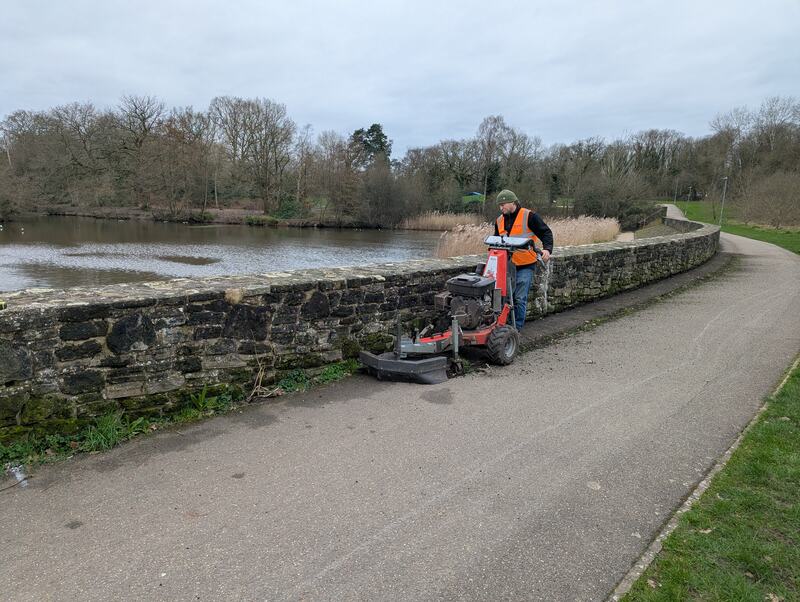
Integrated weed management was never meant to be a swap. The Parks for London and Amenity Forum Integrated Weed Management Reference Guide describes it as a combination of methods, built around why weeds are growing in the first place. On hard surfaces, the answer is nearly always the same: the soil, silt and leaf litter that builds up along kerbs, channels and footway edges.
What the survey's own figures tell us
The most revealing part of the report is the gap between methods councils have trialled and those they now use day to day.
Mechanical weed removal has been trialled by 72% of councils and is now used operationally by 58%. Increased sweeping has been trialled by 37% and is used by 31%. Most councils that try them, keep them. By contrast, many treatment-only methods are trialled widely but rarely kept: hot foam, for example, has been trialled by 52% of councils but is used operationally by just 2%.
That is not because those technologies do not work. Thermal and electric methods can be very effective. It is because, used as a straight swap and judged visit by visit, they look slower and dearer to apply, while the growing medium that keeps bringing weeds back is left in place. Mechanical removal and sweeping are kept because they deal with the cause. Used in sequence, after the growing medium has gone, every treatment method works faster and lasts longer.

Why so many trials disappoint
Many of the comments in the survey dismiss alternatives on the basis of past trials, sometimes other councils' trials. Having worked on several, I recognise the pattern. Trials that disappoint usually share some of these features:
- They start on dirty surfaces, testing a new treatment on weeds growing in decades of compacted detritus.
- They measure the kill, not the regrowth, so the method that removes the growing medium looks no better than one that leaves it in place.
- They run for one season, when the benefits of prevention build over several.
- They cost the treatment, not the whole cycle, leaving out reactive visits, complaints, gully blockages and footway repairs.
Only 41% of councils say they monitor the effectiveness of their alternative methods, and 23% do not know how the cost compares with glyphosate. Without that evidence, it is hard to know whether an approach failed or the trial did.
What the sequence looks like in practice
Sheffield shows what happens when the sequence is followed. Its earlier reduction trials cut spraying but left the growing medium in place, and glyphosate use actually rose as reactive treatments filled the gap. In 2026 it linked weed treatment to a deep clean of every street, focused on removing growing media. Glyphosate use fell by around 67% in a year, complaints about silt and detritus dropped by 39%, and the city ranked eighth in APSE's own benchmarking for footway weeds.
In the Bracknell trial, removing detritus before treatment cut herbicide use by 49%. Our research on pavement succession suggests the best time to act is early, when detritus is around 10 to 25 mm deep, before weed roots anchor into the surface.
Five questions to ask before your next trial
- Why are weeds growing here? Measure detritus depth and note drainage, shade and edges before choosing any method.
- Are we removing the growing medium first? Compare treatments on clean surfaces, not on years of build-up.
- Are we measuring regrowth over time, not just the kill after a week?
- Are we costing the whole cycle, including reactive visits, complaints, drainage and surface repairs?
- Are street cleansing and weed control working together? They are usually separate budgets, but on a pavement they are the same job.
The bottom line
APSE's survey shows councils are already voting with their feet: the methods they keep are the ones that remove what weeds grow in. The next step is to stop asking which product can replace glyphosate, and start asking why the weeds are there at all. That is what integrated weed management was always meant to be.
I explore these ideas in more depth in my book, The Weeds Are Not the Problem. To talk about designing a trial or reviewing your current approach, contact Kersten UK.
Sources: APSE, Glyphosate and Integrated Weed Management: Where do local authorities stand? (2026), survey of councils, August to September 2026. Parks for London and Amenity Forum, Integrated Weed Management Reference Guide (2025 edition). Sheffield City Council, Streets Ahead Glyphosate Strategy Update and 2027 Position (November 2026). Bracknell IWM Trial. Faulkner and Graham (2026), Pavement Ecological Succession.

No comments yet. Login to start a new discussion Start a new discussion